
The combination of BPC-157 and TB-500 is studied in peptide therapy for its potential to help optimize connective tissue recovery and mobility. These peptides have been researched for their role in cellular repair and circulation pathways involved in joints, tendons, and ligaments, helping promote stability, flexibility, and long-term tissue health.
BPC-157 and TB-500 are often used together in recovery-focused peptide therapy protocols following physical strain. Their complementary mechanisms have been studied for their involvement in muscle tissue repair and regeneration, helping the body maintain muscle integrity and overall performance.
This peptide combination has been researched for its role in supporting the body’s natural tissue repair and regeneration pathways. Their effects on cellular migration and recovery processes are associated with maintaining healthy tissue recovery following physical stress or injury.
BPC-157 and TB-500 have been studied for their interaction with pathways involved in inflammation and recovery. Balanced inflammatory signaling plays an important role in helping the body recover and maintain overall tissue health and function.
This peptide therapy combination is frequently used to help optimize recovery across multiple soft tissue types. Their broader systemic activity has been studied for its potential to assist the body’s natural recovery response following procedures, injuries, or ongoing physical stress.
The combination of BPC-157 and TB-500 is studied in peptide therapy for its potential to help optimize connective tissue recovery and mobility. These peptides have been researched for their role in cellular repair and circulation pathways involved in joints, tendons, and ligaments, helping promote stability, flexibility, and long-term tissue health.
BPC-157 and TB-500 are often used together in recovery-focused peptide therapy protocols following physical strain. Their complementary mechanisms have been studied for their involvement in muscle tissue repair and regeneration, helping the body maintain muscle integrity and overall performance.
This peptide combination has been researched for its role in supporting the body’s natural tissue repair and regeneration pathways. Their effects on cellular migration and recovery processes are associated with maintaining healthy tissue recovery following physical stress or injury.
BPC-157 and TB-500 have been studied for their interaction with pathways involved in inflammation and recovery. Balanced inflammatory signaling plays an important role in helping the body recover and maintain overall tissue health and function.
This peptide therapy combination is frequently used to help optimize recovery across multiple soft tissue types. Their broader systemic activity has been studied for its potential to assist the body’s natural recovery response following procedures, injuries, or ongoing physical stress.








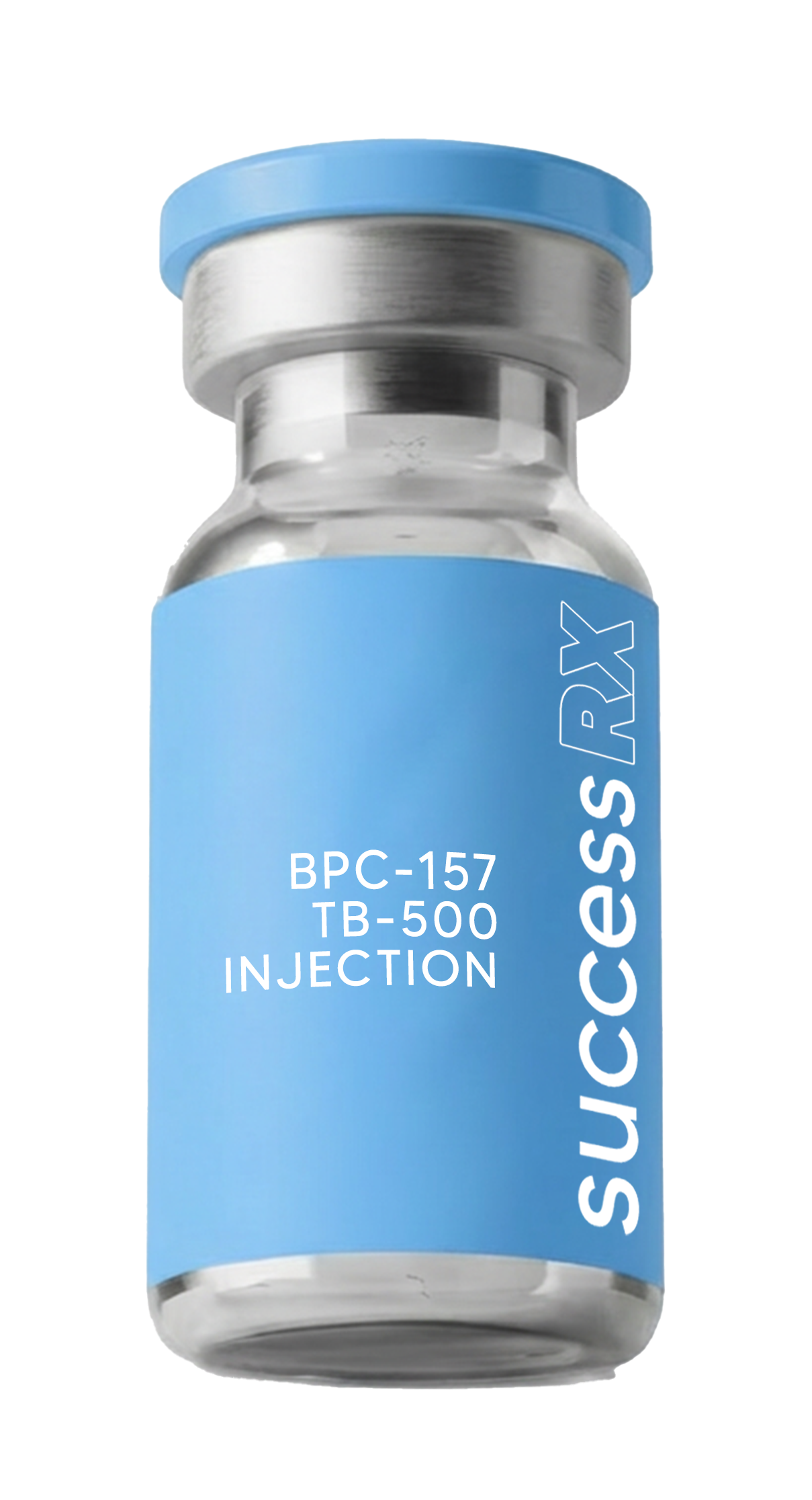
A combined peptide protocol pairing BPC-157 and TB-500, studied for their potential complementary role in recovery and tissue repair.
May help support tendon, ligament, muscle, and joint recovery.
Typically administered through subcutaneous injection, near the area of concern or systemically, as directed by your provider.
Timing is flexible. Many patients administer in the morning or before bed, depending on routine and convenience.
Individual results vary. Early research suggests this combination is generally well tolerated, though long-term human safety data is still developing.